Mon - Sat: 9:00 AM - 6:00 PM
Furniture Care & Maintenance

How to Clean and Maintain Upholstery

A comprehensive technical guide to preserving fine fabrics, treating unexpected spills, and prolonging the structural life of your favorite seating.

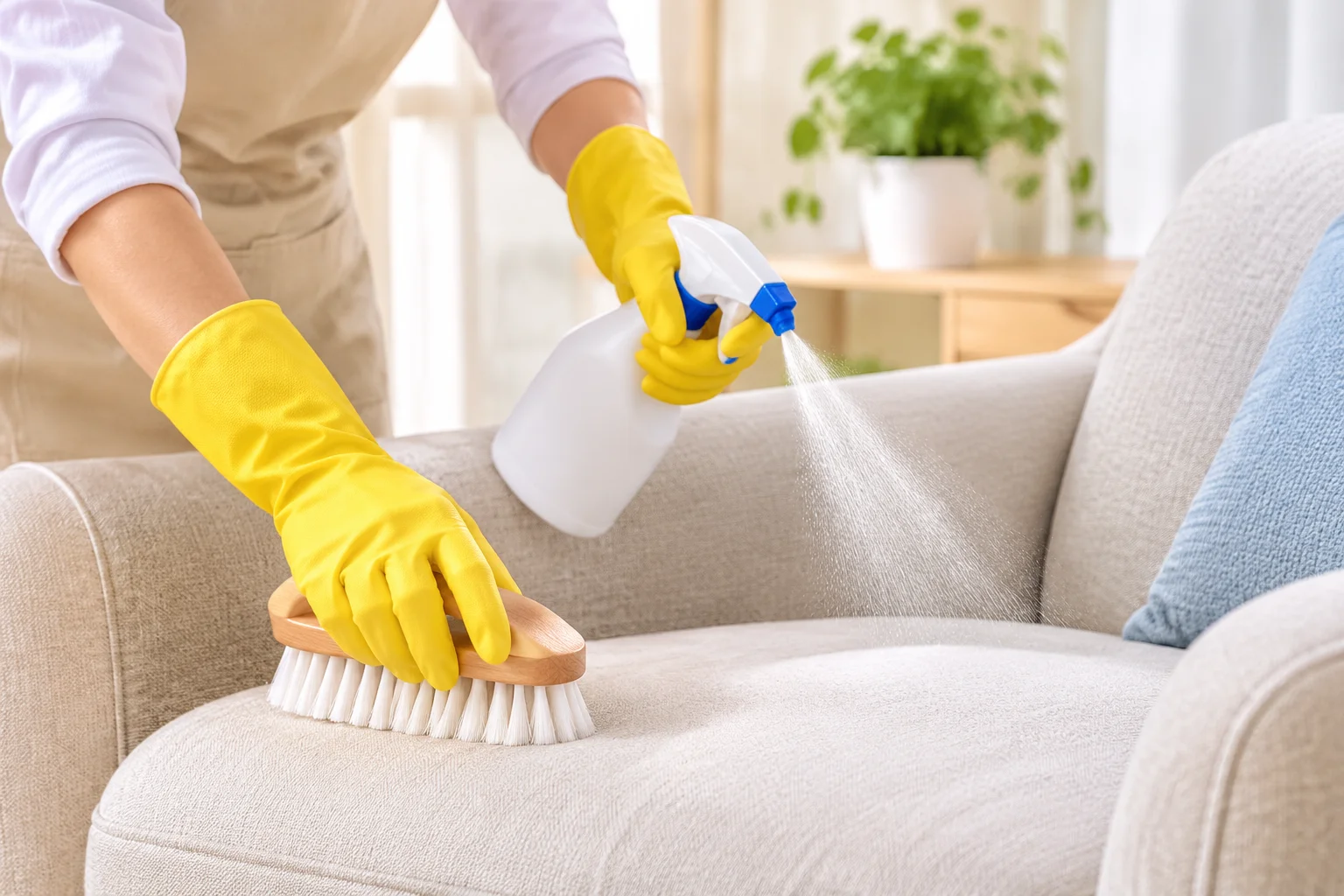
A person carefully cleaning a fabric chair with a soft brush and cleaning spray.
Foundational Knowledge

Decoding Fabric Care Codes and Daily Preservation

Every upholstered chair tells a tactile story inside your home or workplace, yet daily contact with dust, skin oils, and accidental drink spills steadily degrades individual textile fibers.

Before introducing any water or commercial cleaner to your seat, inspect the manufacturer label sewn underneath the frame. Manufacturers designate one of four standard care tags: Code W permits water-based foam solutions; Code S strictly mandates water-free solvent cleaners to avert water rings; Code W/S allows both; and Code X warns against all liquids, tolerating only dry vacuuming or soft brushing.

Treating dirt early remains the single most efficient defense for delicate weaves. Dust particles act as microscopic sandpaper against threads whenever someone sits down. Routine dry vacuuming with an upholstery attachment prevents grit from grinding deep into the backing material, preserving structural elasticity across years of consistent use.

Empirical Metrics

Essential Upholstery Lifespan Benchmarks

2x Lifespan
Doubled durability with scheduled vacuuming
30 Seconds
Critical response window for liquid blotters
12 Months
Recommended deep steam or solvent cycle
pH 7.0
Optimal neutral cleaner balance for weaves

Looking for Stain-Resistant Performance Seating?

Explore our collection of dining and office chairs upholstered in commercial-grade, easy-care fabrics.

A Step-by-Step Methodology for Removing Stubborn Stains

When unexpected coffee drops or grease marks strike your chair, avoid the instinctive urge to scrub aggressively. Vigorous friction frays delicate surface yarns, pushes stains deeper past the backing layer, and permanently damages texture. Instead, arm yourself with high-absorbency microfiber cloths and a targeted strategy.

Execute this sequence promptly whenever spills occur on water-safe fabrics:

  • Blot with a dry, unbleached white towel from the outside perimeter toward the center to contain liquid spread.
  • Prepare a gentle cleaning foam using lukewarm distilled water and mild clear dish soap, avoiding mineral residues left by tap water.
  • Test the solution on a hidden seam under the chair base, waiting five minutes to verify colorfastness and absence of fabric distortion.

Press the cleaning foam onto the stained area with a fresh damp cloth. Once the pigment lifts, use a third cloth dampened with pure distilled water to rinse out soap residues, which attract airborne dust over time if left unrinsed.

Water is often fabric's greatest friend for routine hygiene, yet its greatest adversary when misused against dry-solvent weave specifications.

— Jessica Taylor, Textile & Furniture Restoration Specialist

Long-Term Preservation: Sunlight, Moisture, and Cushion Rotation

Beyond immediate cleaning responses, long-term environmental factors silently dictate how rapidly your chairs age. Ultraviolet rays break chemical bonds within both natural and synthetic dye formulations, causing noticeable discoloration across sunny corners of dining spaces and home offices.

Rotate removable seat cushions once every month to distribute weight impressions evenly across high-density foam cores. If your dining or accent chairs sit near south-facing windows, draw sheer curtains during peak midday sunlight hours. Additionally, maintain indoor relative humidity between 40% and 55% to ensure organic yarns like cotton, wool, and linen neither turn brittle from dryness nor harbor mildew from excess moisture.

Key Maintenance Rules for Upholstered Chairs

  • Check the label code first: Never apply liquid cleaners to furniture marked with Code S or Code X.
  • Always blot, never scrub: Friction degrades surface fibers and spreads pigment into deep cushioning.
  • Rinse soap residues thoroughly: Unrinsed detergent acts as an adhesive magnet for fresh environmental dirt.
  • Vacuum bi-weekly: Low-power suction with a soft brush nozzle eliminates abrasive debris before it cuts fibers.
Jessica Taylor

Jessica Taylor

Furniture Care Expert

Jessica Taylor has specialized in residential textile restoration and ergonomic seating design for over eleven years. She regularly evaluates chair durability standards and publishes practical home maintenance guides.

Discussion

Reader Insights

Claire Jenkins
Claire Jenkins
Verified Reader • 02/11/2026

Checking the cleaning code tag completely saved my linen accent chair! I was about to use regular tap water and detergent, but discovered it is strictly Code S. Using a dedicated solvent lifted an espresso stain without leaving any outline or discoloration.

Leave a Response