Mon - Sat: 9:00 AM - 6:00 PM
Upholstery Guide

Velvet vs Leather: Which is Better?

A practical comparison of tactile comfort, long-term durability, maintenance needs, and interior styling.

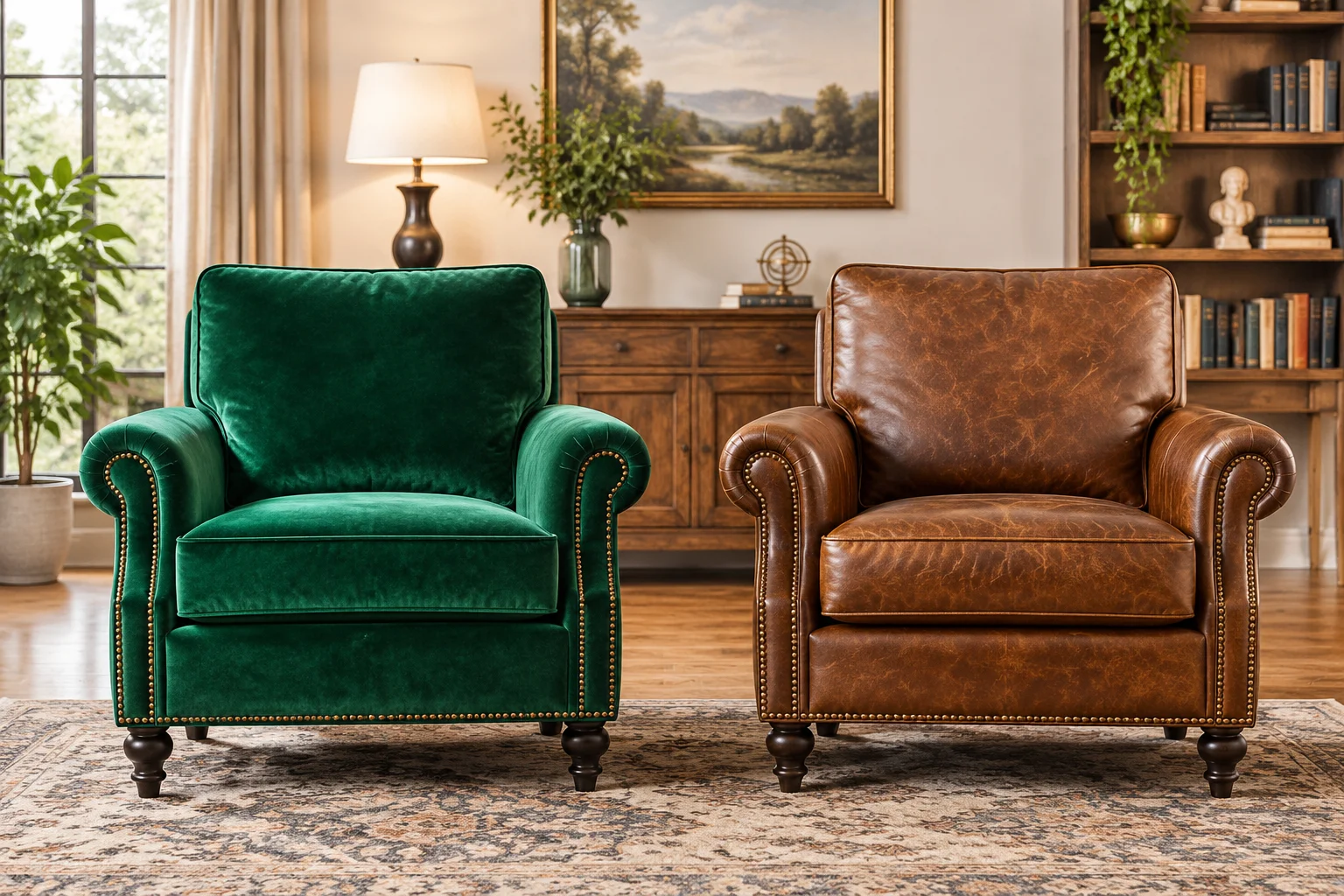
Velvet chair and leather chair shown side by side in an elegant living room setting
Material Face-off

Soft Tactile Luxury Meets Timeless Structural Endurance

Selecting the ideal upholstery material for an accent armchair or dining set fundamentally shapes both the aesthetic tone of your living space and your daily sitting experience.

Velvet brings immediate visual depth and tactile warmth to any room. Its plush upright pile catches changing ambient light, producing subtle sheen gradations that highlight graceful silhouettes. While historical velvets earned a reputation for being delicate, contemporary upholstery velvet crafted from dense polyester blends offers impressive tensile strength and natural stain repellency.

Leather stands on the opposite end of the spectrum as an organic, architectural material that ages with remarkable character. Premium top-grain and full-grain leathers soften over years of regular use, developing a rich patina that synthetic fabrics cannot replicate. However, genuine leather requires consistent hydration and responds acutely to seasonal humidity changes.

Material Benchmarks

Side-by-Side Performance Metrics

50,000+
Martindale Rub Count on Performance Velvet
Instant
Tactile Warmth Without Cold Sensation
15+ Years
Average Usable Lifespan of Top-Grain Leather
10 Seconds
Quick Wipe-Down Time for Surface Spills

Need Guidance Selecting the Right Seating?

Explore our curated selection of velvet lounge chairs and handcrafted leather seating designed for lasting comfort.

Everyday Wear, Pets, Spills, and Comfort Through the Seasons

Tactile comfort often determines initial preferences. Velvet excels during chilly autumn and winter mornings, welcoming you with a cozy embrace that never feels icy to the touch. In contrast, leather can initially feel chilly in cooler rooms and occasionally tacky during humid summer afternoons without climate control.

For active homes with pets and lively children, the equation shifts dramatically depending on specific household habits:

  • Liquid spills roll off treated leather surfaces, allowing immediate cleanup with a damp cloth, whereas velvet requires swift blotting to prevent liquids from settling into base fibers.
  • Cat claws rarely catch on dense, flat-woven synthetic velvet piles because there are no woven loops to snag, while smooth leather hides show puncture marks and scratches permanently.
  • Allergies and pet dander pose no challenge on leather since the non-porous surface wipes completely clean, while velvet needs frequent vacuuming with a soft brush attachment.

Routine maintenance demands consistency regardless of which path you take. A quick weekly brush refreshes the direction of velvet nap and removes resting particles. Leather asks for a mild leather conditioner applied every six to eight months, preserving elasticity along high-stress seams.

Upholstery is not just a visual choice; it sets the daily tactile rhythm of your relaxation and determines how effortlessly your furniture survives real life.

— Robert Green, Furniture Specialist

Interior Design Harmony: Choosing the Right Mood for Your Room

Velvet introduces softened acoustic warmth, making it particularly effective in rooms with hardwood flooring, large glass windows, or tall ceilings where echo reduction is beneficial. Deep jewel tones like emerald, navy, terracotta, and ochre look exceptionally rich in velvet, introducing warmth to modern minimalist spaces or vintage-inspired dining rooms.

Leather commands attention through clean lines and organic grounding. It pairs effortlessly with raw metals, natural walnut, and exposed stone, establishing an air of understated permanence in home libraries, executive workspaces, and open-plan lofts.

The Verdict: Which Material Should You Pick?

  • Choose Velvet for Cozy Lounging: Ideal for reading corners, dining seating, and bedrooms where soft touch, rich colors, and cat-friendly pile matter most.
  • Choose Leather for Longevity & Cleanability: Unbeatable for high-traffic dens and dining chairs when quick spill cleanup and long-term patina development take priority.
  • Mind Room Lighting: Avoid positioning both materials in continuous direct sunlight to prevent fiber fading or hide drying.
  • Consider Mixed Texture Schemes: Pairing a leather accent recliner with plush velvet sofa cushions balances grounded structure with soft tactile warmth.
Robert Green

Robert Green

Senior Furniture Specialist

Robert has spent over twelve years testing furniture durability, frame construction, and upholstery performance for Canadian homes, helping homeowners balance aesthetic appeal with practical everyday utility.

Discussion

Reader Insights

Eleanor Vance Avatar
Eleanor Vance
Verified Buyer • 24/10/2026

The comparison in this guide is spot on. We recently upgraded to a cognac leather lounge chair in the living room and keeping it clean with two toddlers around has been an absolute breeze. Glad we chose leather for this high-traffic spot!

Julian Ross Avatar
Julian Ross
Store Concierge
25/10/2026

Thank you for sharing your experience, Eleanor! Cognac leather develops a stunning natural patina over time while easily handling everyday family spills. Enjoy your armchair!

Marcus Holloway Avatar
Marcus Holloway
Verified Reader • 28/10/2026

We went back and forth between leather and velvet for our home office desk chair. This breakdown helped us realize that velvet would handle our cats much better without claw puncture marks. Very satisfied with our decision!

Clara Bennett Avatar
Clara Bennett
Design Consultant
30/10/2026

That is a fantastic choice, Marcus! Densely woven synthetic velvet is truly an unsung hero in pet-friendly homes because claws slide right off the pile.

Leave a Response