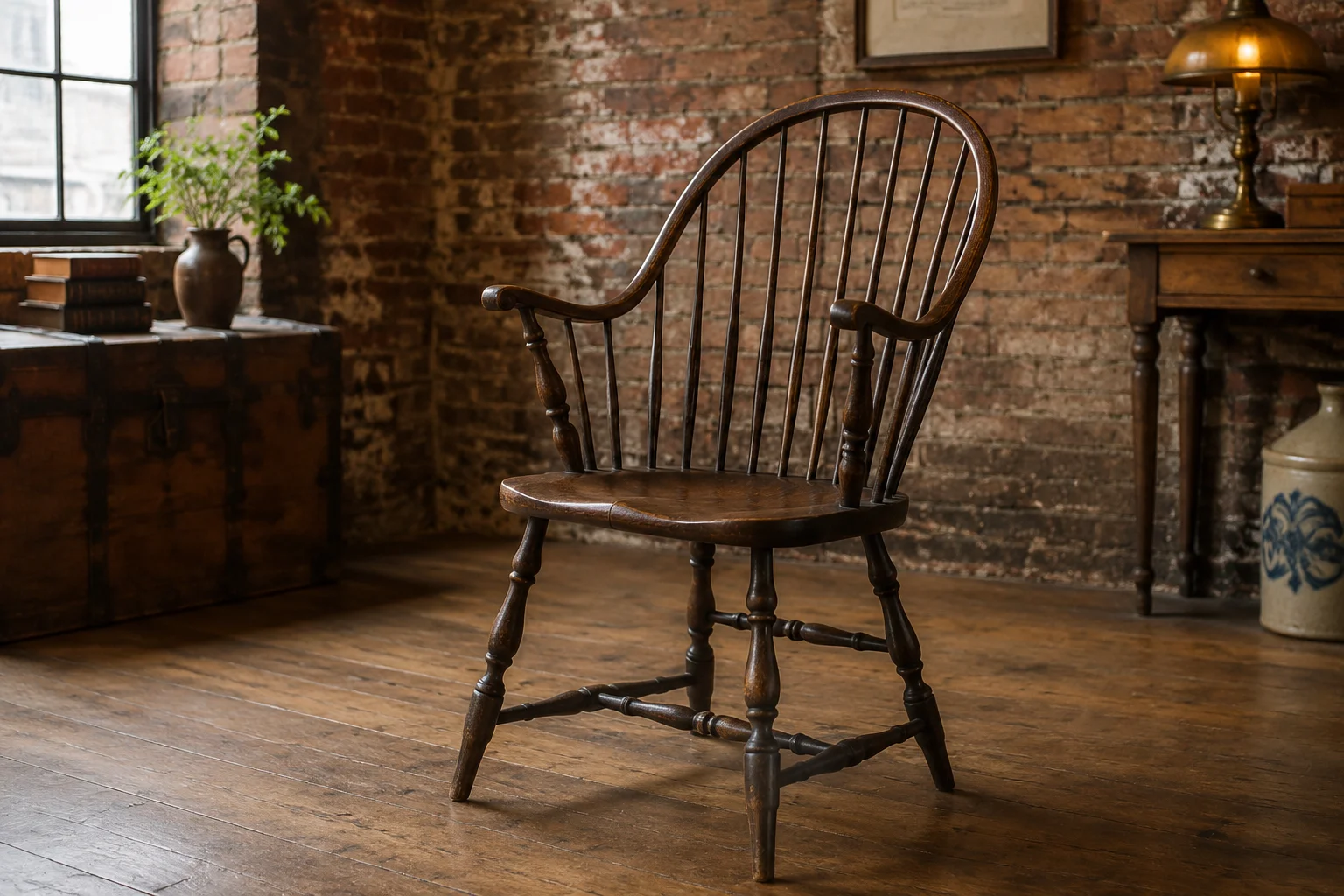
Few seating silhouettes carry a lineage as enduring, utilitarian, and architecturally inventive as the Windsor chair. Originating in the early eighteenth century across the pastoral woodlands of Buckinghamshire and Berkshire, the design fundamentally challenged traditional European cabinetmaking.
Instead of relying upon heavy rectangular frames where back posts extended straight into the floor, rural makers introduced a modular construction. The heart of the chair became a thick, hand-scooped wooden seat into which all upper spindles and turned legs were pegged independently. This structural independence allowed woodworkers to produce resilient chairs that flexed under dynamic weight rather than snapping at rigid joint intersections.
Marketed heavily through the trading hub of Windsor before being shipped down the River Thames into London coffeehouses, these practical seats earned their lasting moniker. Forest wood turners, known regionally as bodgers, worked directly among beech groves using pole lathes, supplying turned components to town workshops where village wheelwrights and chairmakers steam-bent bows and assembled finished chairs for domestic and commercial use.
Reader Insights
No comments yet. Be the first to leave a response below!
Leave a Response